![[Brandz] Logo - White](https://brandzbulletin.com/wp-content/uploads/2024/06/Brandz-Logo-White.png)

Did you know consistent brand presentation across all platforms increases revenue by up to 23% (Lucidpress)? Yet most companies struggle with disjointed messaging, off-brand content, and missed opportunities.
The solution? A bulletproof brand management system—a structured approach to controlling how your brand looks, sounds, and feels at every touchpoint.
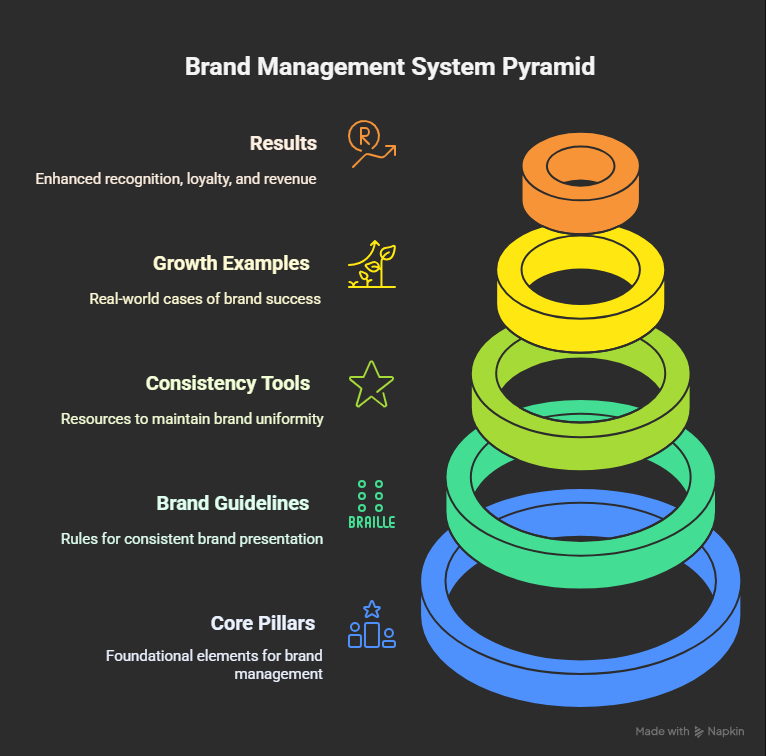
In this guide, you’ll learn:
✔ The 5 core pillars of brand management
✔ How to create airtight brand guidelines
✔ Tools to enforce consistency at scale
✔ Real-world examples that drive 10X growth
Whether you’re a startup or enterprise, this system will eliminate branding chaos and make every customer interaction count.
What is a Brand Management System? (And Why You Need One)
A brand management system is your centralized command center for:
- Visual identity (logos, colors, fonts)
- Messaging (voice, tone, taglines)
- Customer experience (onboarding, support, packaging)
The Cost of Poor Brand Management
| Without System | With System |
|---|---|
| Inconsistent visuals confuse customers | Instant recognition across all channels |
| Marketing teams reinvent the wheel | 50% faster content creation |
| Employees misrepresent the brand | Every team aligns with core values |
The 5 Pillars of a High-Impact Brand Management System
1. Brand Strategy Foundation
- Purpose: “Why do we exist beyond profit?” (Patagonia: “Save our home planet”)
- Positioning: How you’re different (Tesla: “Luxury electric, not just electric”)
- Personality: Human traits (Innocent Drinks: “Friendly, witty, wholesome”)
Pro Tip: Use a brand strategy canvas to map this in one page.
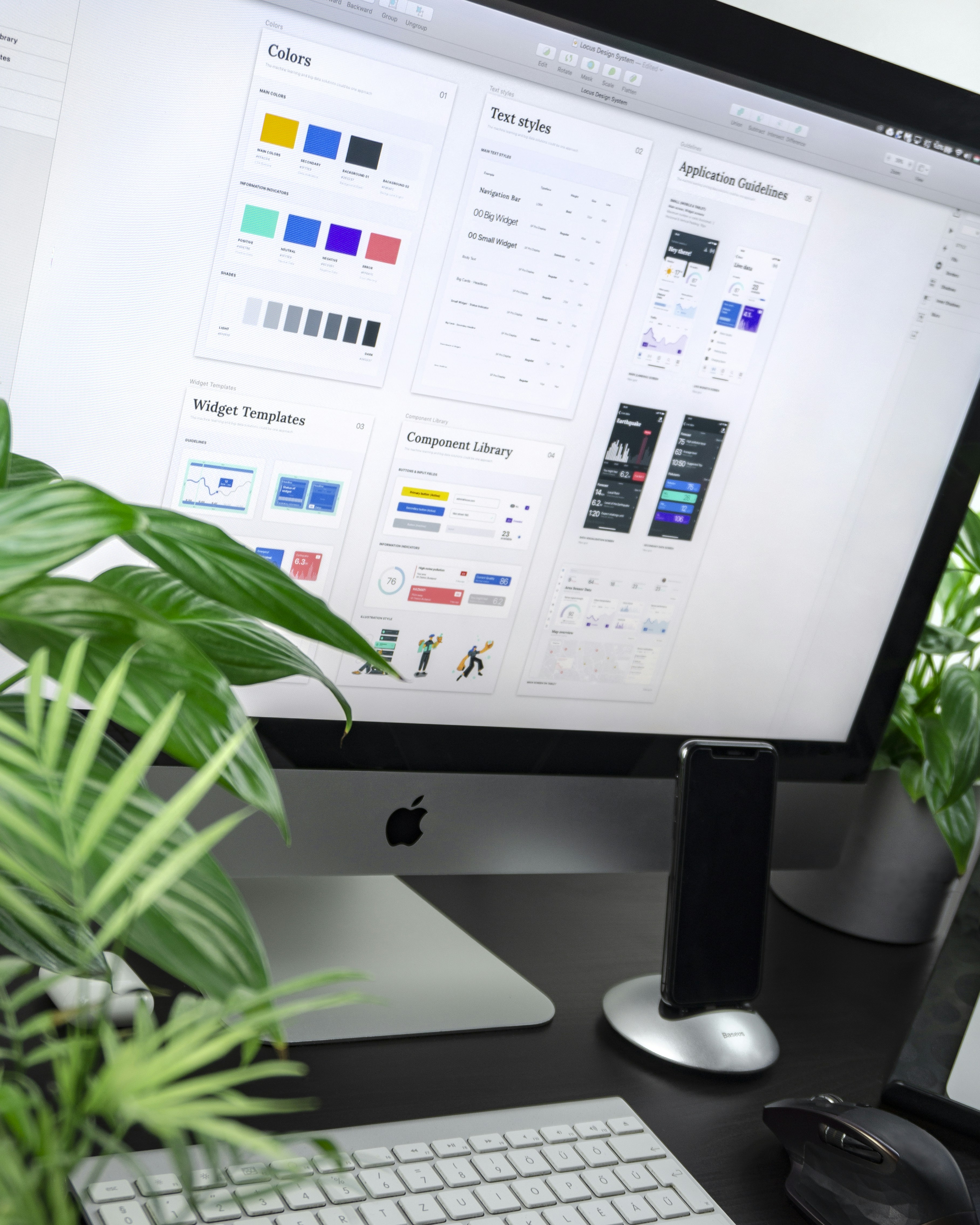
2. Ironclad Brand Guidelines
Your rulebook should cover:
- Logo usage (spacing, sizes, incorrect applications)
- Color palette (HEX/RGB codes + usage rules)
- Typography (primary/secondary fonts)
- Photography style (lighting, subjects, filters)
- Voice & tone (Slack: “Clear, concise, slightly quirky”)
Example: NASA’s 60-page brand guidelines ensure perfection across 10,000+ teams.
3. Digital Asset Management (DAM) Hub
A single source of truth for:
✅ Approved logos
✅ Templates (PPT, social posts)
✅ Product images
Top Tools: Bynder, Frontify, Dropbox Business
4. Cross-Team Training & Enforcement
- Marketing: Quarterly brand refreshers
- Sales: Email signature templates
- Customer Support: Approved response library
Case Study: Airbnb’s brand education program reduced style guide violations by 72%.
5. Performance Tracking
Measure what matters:
- Brand recall (surveys)
- Visual consistency score (AI tools like Brandfolder)
- Sentiment analysis (Brandwatch, Mention)
3 Brand Management Systems That Crush It
1. Coca-Cola: The Consistency King
- 130+ years of identical red/white branding
- Localized adaptations without losing core identity
2. Glossier: Community-Loved
- User-generated content doubles as brand assets
- Employees embody brand vibe (no corporate speak)
3. Shopify: Scalable Storytelling
- Merchant success stories = 60% of their content
- All teams use same “Startup to Storefront” narrative
Step-by-Step: Build Your System in 30 Days
Week 1: Audit & Strategy
- Run a brand consistency check (review 10 random pieces of content)
- Interview leadership on core differentiators
Week 2: Create Guidelines
- Design: Use Canva Brand Kit for quick-start templates
- Copy: Document 3-5 voice principles (e.g., “No jargon”)
Week 3: Implement DAM
- Migrate assets to Bynder or Figma
- Set user permissions (who can edit vs. view)
Week 4: Train & Launch
- Host lunch-and-learn sessions
- Create a brand police Slack channel for Q&A
FAQs
How often should brand guidelines be updated?
Minor tweaks yearly; major rebrands every 5-7 years.
What’s the #1 mistake in brand management?
Letting departments interpret guidelines differently.
Can small businesses benefit from this?
Absolutely—start with a 1-page style guide and expand.
How do you handle global brand variations?
Core elements stay fixed; local teams adapt imagery/language.
What ROI can I expect?
Companies with strong systems see 3X higher brand recall.
Now Over to You
A brand management system isn’t about control—it’s about clarity. When every team member can answer:
- How should our brand look?
- How should it sound?
- What experience do we deliver?
…that’s when magic happens.
Your Action Plan:
- Download our free Brand Guidelines Template [Link]
- Schedule a 1-hour brand audit this week
- Pick one pillar to strengthen first
Want to go deeper? Check out our 2024 Brand Consistency Report or How Top Brands Use AI for Asset Management.