![[Brandz] Logo - White](https://brandzbulletin.com/wp-content/uploads/2024/06/Brandz-Logo-White.png)
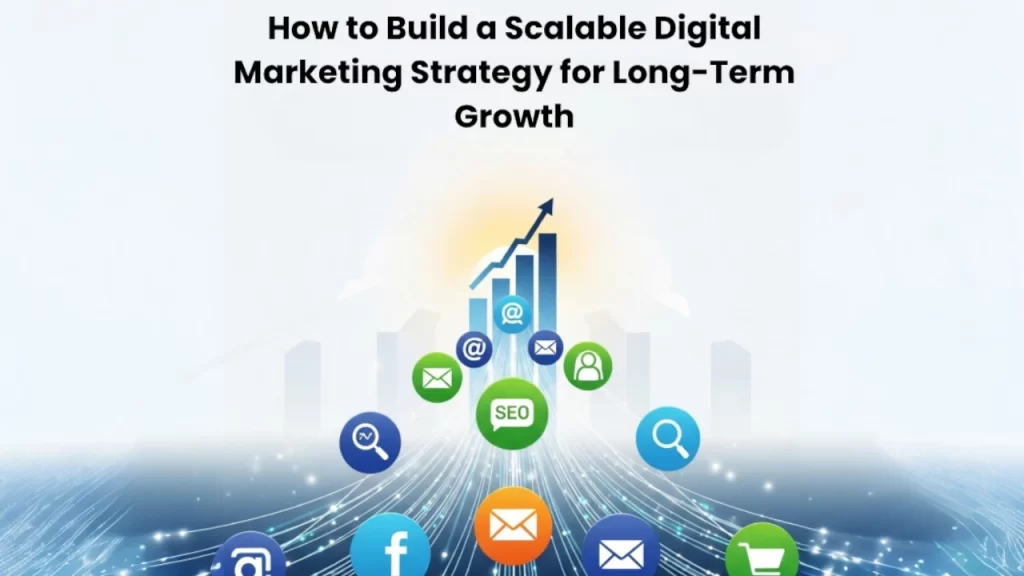
In today’s fast-paced digital world, businesses need strategies that adapt and grow with demand. A scalable approach allows you to:
- Reach larger audiences without proportionally increasing costs
- Optimize campaigns based on performance data
- Expand into new markets efficiently
- Ensure consistent brand messaging across channels
Without scalability, marketing efforts plateau—limiting growth and ROI.
Step 1: Define Clear Goals and KPIs
Before launching any campaign, determine what “success” looks like.
Key steps:
✅ Set measurable goals (e.g., leads, revenue, traffic)
✅ Identify key performance indicators (KPIs) to track progress
✅ Align marketing objectives with overall business goals
✅ Establish a timeline and milestones for growth
A clear goal framework ensures your strategy remains focused, measurable, and adaptable.
Step 2: Know Your Audience Inside and Out
A scalable strategy requires deep understanding of your target audience.
Tips:
- Create detailed buyer personas
- Segment your audience by demographics, behavior, and intent
- Analyze customer data to uncover trends and preferences
- Leverage surveys, polls, and social listening for insights
Understanding your audience allows for personalized, high-converting campaigns that scale efficiently.
Step 3: Choose the Right Marketing Channels
Not every platform is right for your business. Focus on channels that deliver the best ROI and are scalable:
- SEO: Builds long-term organic traffic
- Content Marketing: Establishes authority and drives engagement
- Email Marketing: Nurtures leads at scale
- Social Media: Amplifies reach and builds community
- Paid Ads (Google, YouTube, Meta): Quick visibility with precise targeting
- Affiliate & Influencer Marketing: Expands reach without heavy upfront costs
Multi-channel campaigns allow you to diversify risk and scale audience reach over time.
Step 4: Develop High-Quality, Replicable Content
Content is the foundation of scalable marketing.
Strategies for content that grows with your business:
- Build evergreen assets that attract traffic continuously
- Create templates for social posts, emails, and ads
- Repurpose content across channels (blogs → videos → infographics)
- Use content calendars for consistent publishing
This approach saves time while ensuring your content strategy adapts to growth.
Step 5: Automate Marketing Processes
Automation is key to scalability. It reduces manual effort and maintains consistent messaging across campaigns.
Automation opportunities include:
- Email workflows for lead nurturing
- Social media scheduling
- CRM-based segmentation and targeting
- Programmatic ad campaigns
- Chatbots for customer service and lead capture
Automation frees your team to focus on strategy and creative optimization, essential for long-term growth.
Step 6: Leverage Data and Analytics
Data-driven decisions make strategies scalable.
Tips for analytics-driven growth:
- Track KPIs across all channels (traffic, conversions, engagement)
- Use A/B testing to optimize ad creatives and landing pages
- Monitor customer journey and funnel performance
- Apply predictive analytics to forecast trends and ROI
Continuous analysis ensures your campaigns scale effectively while remaining cost-efficient.
Step 7: Optimize for Conversion at Every Stage
Traffic alone isn’t enough—your strategy must convert visitors into leads and customers.
Conversion optimization tips:
- Streamline landing pages with clear CTAs
- Test ad creatives, headlines, and messaging
- Use remarketing campaigns to recapture interested prospects
- Implement exit-intent popups and lead magnets
Optimizing conversions at every step maximizes the impact of every marketing dollar.
Step 8: Scale Campaigns Strategically
When you’ve identified high-performing campaigns, it’s time to scale.
Scaling strategies include:
- Increasing ad budgets gradually while maintaining ROI
- Expanding to new audiences or demographics
- Replicating successful campaigns across channels
- Investing in high-performing content assets for broader reach
Strategic scaling ensures growth without losing efficiency or ROI.
Step 9: Build a Repeatable Framework
A truly scalable strategy is repeatable and adaptable.
- Document processes for campaign creation and management
- Create SOPs for content production, social posting, and analytics
- Train your team on tools, automation, and reporting
- Continuously refine strategy based on performance metrics
A repeatable framework allows your business to grow consistently over time.
FAQs About Scalable Digital Marketing
Q1: How long does it take to see results from a scalable marketing strategy?
SEO and content marketing may take 3–6 months, while paid ads can deliver immediate results.
Q2: Can small businesses implement scalable strategies?
Yes. Scalability is about processes and automation, not budget size.
Q3: How do I know which channels to scale first?
Focus on channels with the highest ROI and lowest customer acquisition costs.
Q4: Should I outsource or keep marketing in-house?
A mix works best—core strategy in-house, specialized tasks outsourced to experts.
Q5: How often should I update my digital marketing strategy?
Review at least quarterly, or whenever major business, market, or algorithm changes occur.
Conclusion: Grow Your Business Without Limits
A scalable digital marketing strategy is the key to long-term growth, efficiency, and market dominance.
By understanding your audience, leveraging data, creating replicable processes, and strategically scaling campaigns, your business can grow sustainably without overextending resources.
Remember: The goal isn’t just growth—it’s smart, scalable, and profitable growth that lasts for years to come.
Internal Link Suggestions:
- Read next: “Business Growth Through Digital Ads: What Works in 2025”
- Explore: “The C-Suite’s Guide to Accelerating Digital Innovation”
External Authoritative Sources:
- HubSpot: Digital Marketing Strategy Guide
- Neil Patel: Scalable Marketing Strategies