![[Brandz] Logo - White](https://brandzbulletin.com/wp-content/uploads/2024/06/Brandz-Logo-White.png)
Introduction
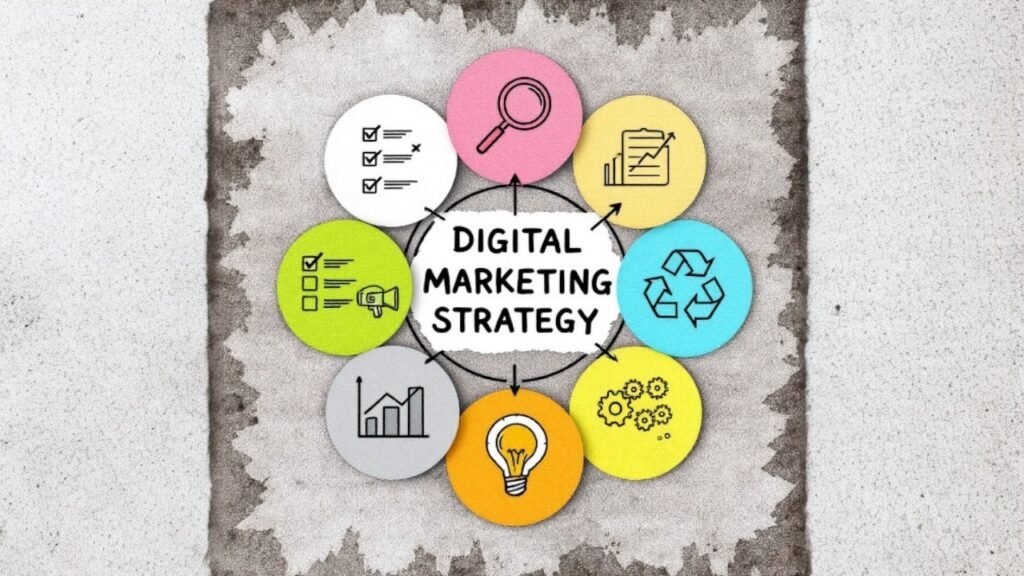
In today’s digital landscape, a well-crafted marketing strategy is essential for business success. Whether you’re a startup or an established brand, a solid digital marketing plan helps you reach your target audience, drive traffic, and maximize conversions. This guide will walk you through 7 simple steps to create a winning digital marketing strategy that delivers real results.
Step 1: Define Your Goals and Objectives
Before diving into digital marketing tactics, clearly outline your business goals. Are you looking to:
✅ Increase website traffic?
✅ Boost brand awareness?
✅ Generate more leads?
✅ Improve customer retention?
Your goals should be SMART (Specific, Measurable, Achievable, Relevant, and Time-bound) to ensure clarity and focus.
Step 2: Identify Your Target Audience
Understanding your audience is key to a successful strategy. Define your ideal customer persona based on:
✔️ Demographics (age, gender, income, location)
✔️ Psychographics (interests, values, pain points)
✔️ Online behavior (preferred platforms, purchasing habits)
Conduct surveys, analyze existing customer data, and use tools like Google Analytics and Facebook Audience Insights to refine your audience targeting.
Step 3: Conduct a Competitive Analysis
To stand out, you must know what your competitors are doing. Analyze:
📌 Their strengths and weaknesses
📌 The channels they use (SEO, PPC, social media, email marketing)
📌 Their engagement tactics
📌 The keywords they rank for
Use tools like SEMrush, Ahrefs, and SimilarWeb to gain valuable insights.
Step 4: Choose the Right Digital Marketing Channels
Not all platforms work for every business. Choose the best mix based on your audience and objectives:
📍 SEO (Search Engine Optimization) – To rank higher on Google and drive organic traffic.
📍 PPC (Pay-Per-Click Advertising) – For quick traffic and conversions via platforms like Google Ads and Facebook Ads.
📍 Social Media Marketing – To engage and interact with your audience on platforms like Instagram, Facebook, LinkedIn, and Twitter.
📍 Content Marketing – To educate and attract potential customers through blogs, videos, and infographics.
📍 Email Marketing – To nurture leads and maintain relationships with existing customers.
📍 Affiliate & Influencer Marketing – To leverage the credibility of others for brand promotion.
Step 5: Develop a Content Marketing Plan
Content is the backbone of digital marketing. Your content strategy should include:
📌 Blog posts – Educational and SEO-friendly content to drive organic traffic.
📌 Videos – Engaging short-form and long-form video content for YouTube, Instagram Reels, and TikTok.
📌 Infographics – Visual content to simplify complex topics.
📌 E-books & Whitepapers – To establish authority in your industry.
📌 User-generated content (UGC) – Customer reviews, testimonials, and case studies.
A content calendar helps you plan and stay consistent.
Step 6: Implement Marketing Automation & Analytics
To maximize efficiency, leverage automation tools for:
🔹 Email automation – Use tools like Mailchimp or HubSpot to send personalized emails.
🔹 Social media scheduling – Platforms like Buffer and Hootsuite help maintain a consistent presence.
🔹 Chatbots & CRM – Improve customer service and lead nurturing with AI-driven chatbots.
Track performance using Google Analytics, Facebook Insights, and UTM tracking to measure ROI and refine your strategy.
Step 7: Monitor, Optimize, and Scale
Digital marketing is an ongoing process. Regularly analyze your campaigns and optimize based on performance metrics:
✔️ Website Traffic – Monitor Google Analytics to track visitors and bounce rates.
✔️ Engagement Rates – Assess likes, shares, and comments on social media.
✔️ Conversion Rates – Measure lead generation and sales performance.
✔️ Ad Performance – Adjust PPC campaigns for better cost efficiency.
Continuously test, tweak, and scale what works best to maximize growth.
Conclusion
A successful digital marketing strategy is not about using every platform but choosing the right ones that align with your goals and audience. By following these 7 simple steps, you’ll create a data-driven, results-oriented marketing plan that drives real business growth.
👉 Ready to take your business to the next level? Start implementing these strategies today!
FAQs
1. What is the most important step in a digital marketing strategy?
Defining clear business goals and identifying your target audience are crucial for success.
2. How long does it take to see results from digital marketing?
It depends on the strategy—SEO takes months, while PPC and social media ads can show results in days or weeks.
3. Which is more effective: SEO or PPC?
SEO is a long-term investment, whereas PPC provides quick but paid traffic. A balanced approach works best.
4. What tools should I use for digital marketing?
Popular tools include Google Analytics, SEMrush, Ahrefs, HubSpot, Mailchimp, and Canva for content creation.
5. How often should I update my digital marketing strategy?
Regular monitoring and adjustments should be made monthly or quarterly to align with trends and performance data.